

Scaling for expansion
Creating a flexible foundation that keeps the customer experience consistent as new products evolve.
Adapted for confidentiality
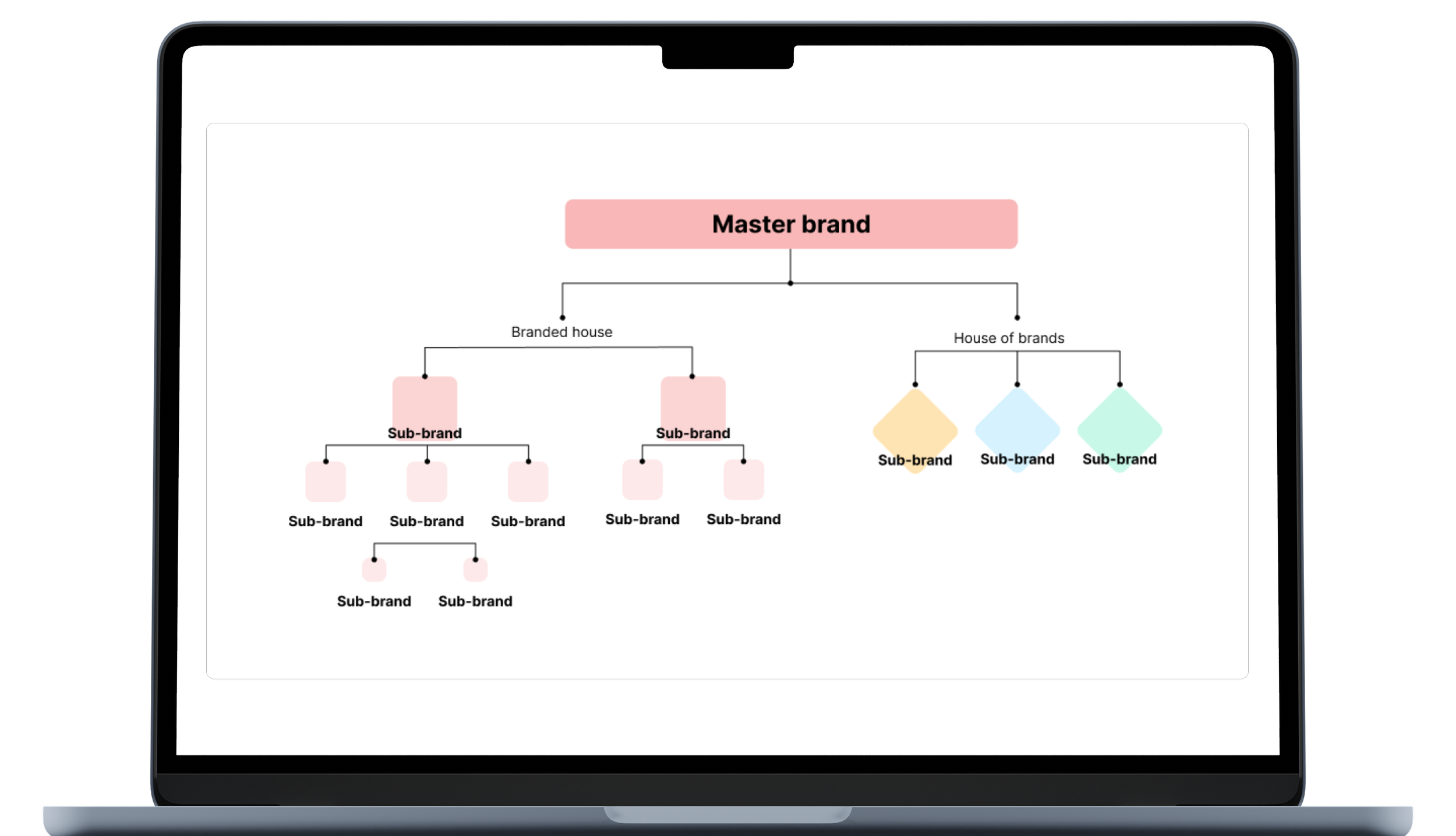

Overview
Scope
Multi-brand B2C, D2C, and B2B cross-channel ecosystem for a Fortune 500 insurance company.
Focus
• Mapped shared patterns and edge-case requirements across multiple platforms and brands.
• Aligned enterprise stakeholders around scalable design standards and system governance.
• Designed flexible experience foundations to support future acquisitions, products, and brand expansion.
Role
Senior Product Lead
Partnered with enterprise UX leadership to establish a scalable design system and modular experience framework used across multi-brand platforms and future product expansion initiatives.
Team
UX Management and UX leads across the enterprise while leading collaboration efforts among UX Designers, Content Designers, and Researchers.
Our challenge
Growth introduced an interesting design problem.
As new brands and products joined the ecosystem, each one brought unique business needs, customer expectations, and existing patterns. While teams needed the flexibility to support those differences, customers still expected a familiar and consistent experience.
Rather than designing each product independently, we explored how a shared platform could support future growth without sacrificing usability, consistency, or delivery speed.
That meant balancing immediate product needs with long-term platform health—creating a foundation that could evolve as the business continued to expand.
Our opportunity
Instead of asking how each new product should fit into the platform, we started asking what every product had in common.
That question changed the direction of the work.
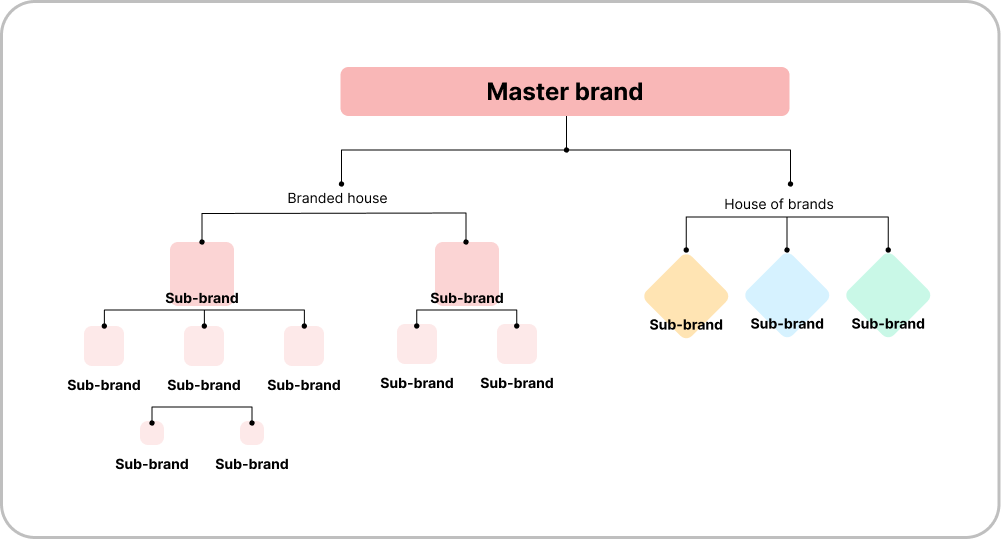
It shifted our focus from individual product launches to creating shared capabilities, reusable experience patterns, and a flexible foundation that could support future brands, products, and channels.
For customers, that meant more familiar experiences across the ecosystem.
For product teams, it created a clearer path for future development and reduced the need to solve the same problems repeatedly.
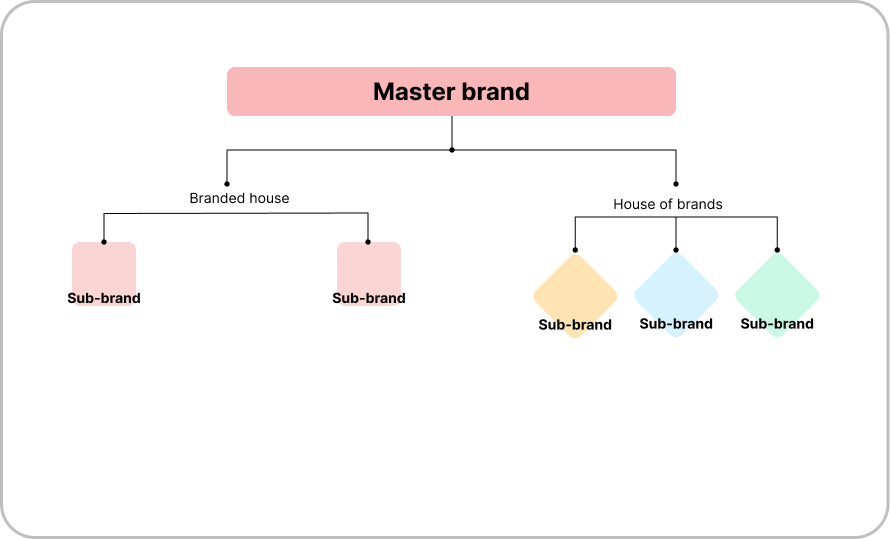
Current state
Ideal state
Our strategy
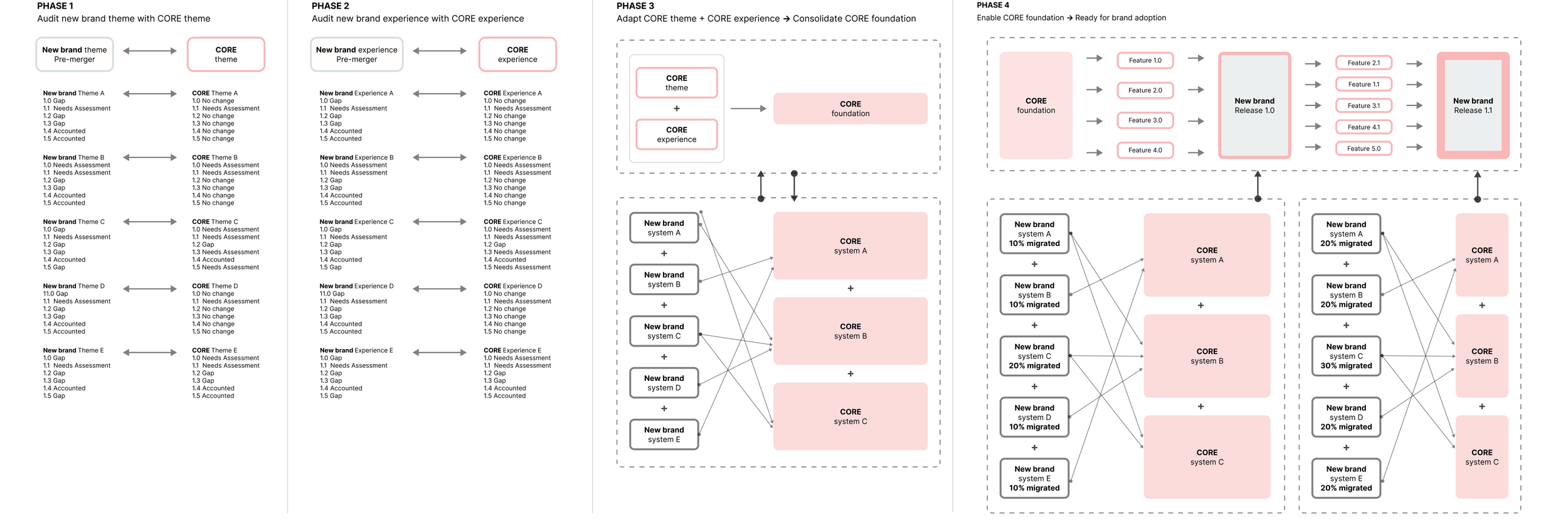
Working within a phased transformation strategy, we established a continuous cycle of ideation, validation, iteration, and refinement.
Through ongoing collaboration with product, engineering, business, and design stakeholders, we evaluated how new products would influence the broader ecosystem and identified opportunities to strengthen core platform capabilities.
Key areas of focus included:
Understanding the needs of multiple product teams and user groups.
Identifying common workflows, patterns, and platform dependencies.
Evolving shared design components and experience frameworks to support broader adoption.
Balancing short-term delivery needs with long-term platform scalability.
Continuously validating assumptions through stakeholder feedback and iterative design exploration.

Our outcome
The initiative established a scalable foundation for future product adoption, improved alignment across teams, and informed the evolution of shared platform capabilities.The phased approach identified risks, plans to monitor the risks, and how to adapt to the risks and issues that were and would be surfaced. The work created a repeatable approach for evaluating and integrating new products while maintaining experience consistency across the ecosystem.
Exploring emerging practices
As platform complexity increased, we explored AI-assisted methods for synthesizing stakeholder inputs, documenting patterns, and accelerating workshop preparation. These experiments helped support decision-making and knowledge sharing across teams while maintaining human oversight for strategic recommendations.